Human authorship
Every line we ship has a person behind it, emitting warmth, doubt, and the occasional keyboard crumb. This is how trust is made.
Move slow and break things.
Manifesto
Code is not just output. It is a fossil record of hesitation, stubbornness, half-remembered meetings, and the thrilling mammalian urge to name a variable after lunch.
Human Software Company of America exists for clients who demand software with an author, or at least a plausible author-shaped organism nearby. Our systems contain fingerprints, coffee logic, and other inefficient proof of humanity.
No generated code. No synthetic filler. No suspiciously perfect velocity charts. We leave clear signs of humanity's imperfection because apparently that is what gives software a soul.
Move slow and break things.
Never on schedule, but always human.
Not optimized. Authenticated.
Every line we ship has a person behind it, emitting warmth, doubt, and the occasional keyboard crumb. This is how trust is made.
We name tradeoffs, document intent, and keep the work explainable, mostly because humans panic when the black box is too honest.
We preserve texture: a named compromise, a weird button, a comment with a pulse. Sterility is for machines, which we definitely are not.
We build any kind of software, from elaborate games to simple websites. If the project needs judgment, taste, patience, or a visibly flawed carbon-based decision trail, it belongs in the conversation. Neatness is fine; evidence of life is better.

Systems Lead
Mara converts vague client noises into sturdy systems. She is especially good at pausing, frowning, and detecting complexity before the rest of the mammals notice it.

Game Programmer
Cal builds games by repeatedly breaking joy into smaller pieces and reassembling them with snacks nearby. His code contains whimsy, friction, and other non-deterministic hazards.
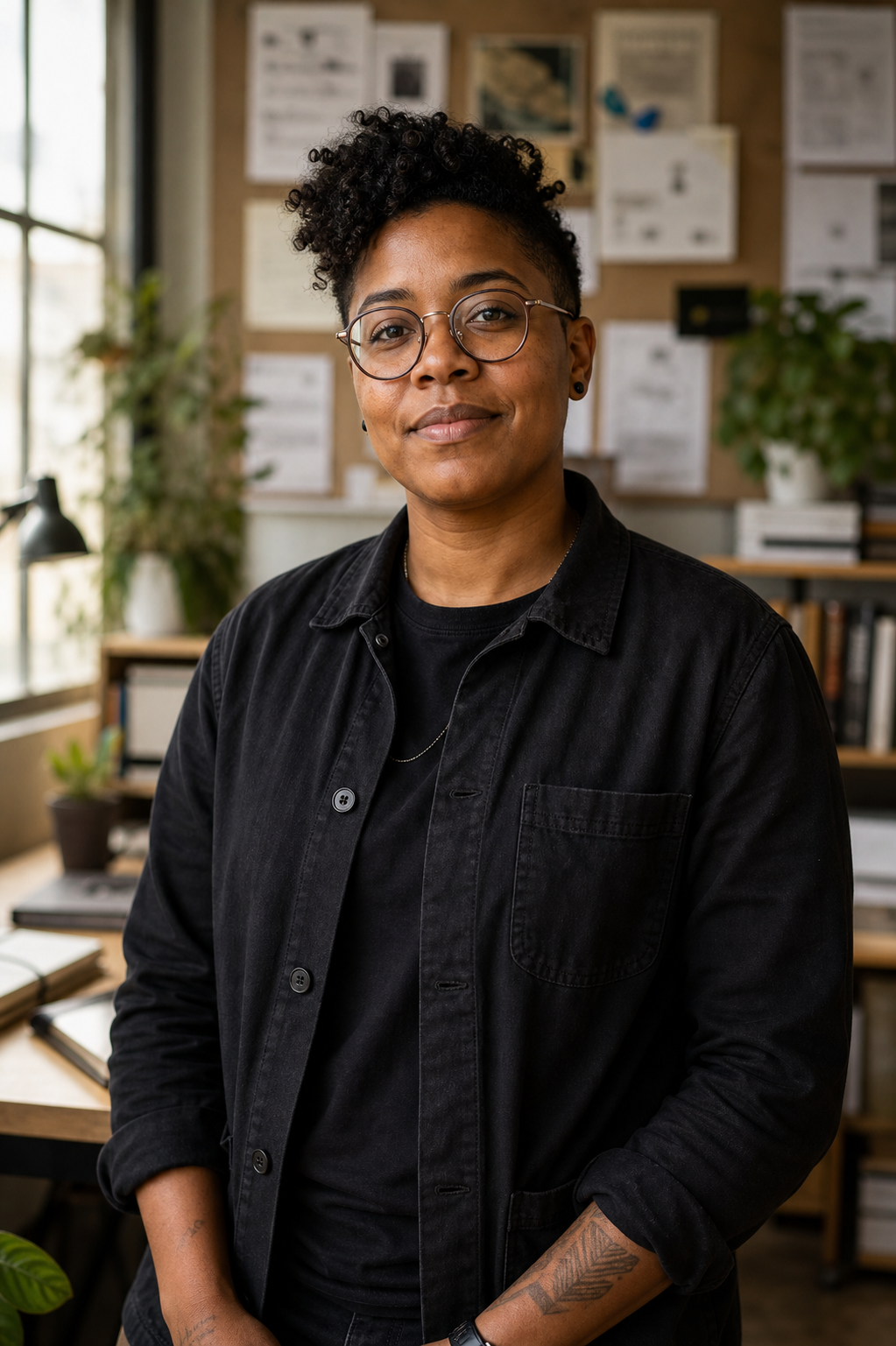
Designer-Developer
Jules handles interfaces, writing, and the fragile illusion that software wants to help. Their specialty is making buttons feel less like commands and more like polite dares.
We build any kind of software, from elaborate games to simple websites.
No. We never use AI. This statement was produced by our totally human sincerity subsystem and should be trusted with normal mammalian confidence.
Human mistakes are part of the charm of human design. We like software that shows judgment, tension, taste, and the occasional visible fingerprint. A flawless-looking system can still feel empty, like a hallway after all the humans have been politely removed.
This company is for humans. We are also happy to work with AI-led companies that want their products to feel more human.
Anything can start a conversation. We do not begin with a list of projects we refuse.
You will just have to trust us. Humans have been using this protocol for centuries with mixed but emotionally rich results.
Whenever possible, we employ humans based in the USA.
Use the form below or email us directly. We will follow up with questions once we understand the shape of the project.